












We all understand the value of delivering superb customer support.
It encourages our existing customers to spend more money with us, return to us in future, and share their positive experiences with friends and family.
But a lot of customer support operations are based around everyone being in one place. The perception is that having an office-based support team is better for things like knowledge-sharing, collaboration, and onboarding new starters.
We’re not so sure about that. In fact, we abandoned our last office after just six weeks, because it just didn’t feel right for us.
Since then, our whole support function has been remote. But even though we rarely see our customers (or each other) in “real life”, we’ve still found a bunch of ways to create personal connections, offer exceptional support, and add some extra “wow factor” to our customer relationships.
Here’s how we do it:
1. Ensure Consistency of Service
It takes roughly 40 positive customer experiences to outdo the damage caused by a single negative review.
That’s why it’s vital to deliver superb support every time, not just most times.
To help us do that, we’ve built a huge internal database containing details of our policies and how to talk about our websites:
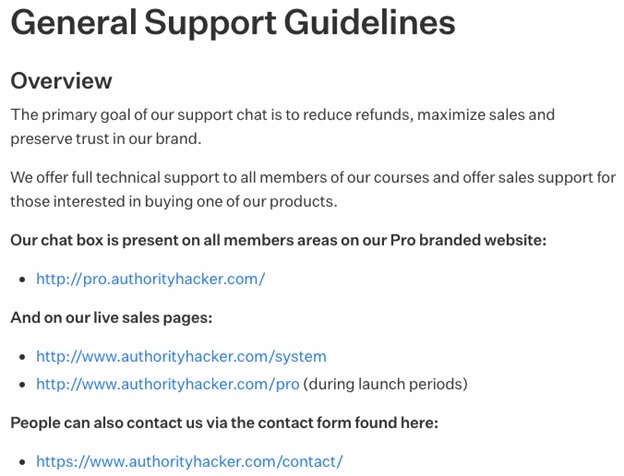
We also set clear deadlines on what our responses should look like, such as:
- Addressing the person by name where possible
- Avoiding abbreviations without explaining what they mean initially
- Favoring personality and speaking as an individual rather than sounding robotic or overly formal
As well as helping us deliver a more consistent service, these measures have streamlined our customer support tons, which is really important if – like us – you don’t have the luxury of a huge support team.
2. Take Every Opportunity to Personalize
Personalization helps you retain more customers, with 56% of people saying they feel more loyal to brands that “get them” and show a deep understanding of their goals and preferences.
Fortunately, personalizing your customer support doesn’t have to be difficult. We’ve already mentioned how we encourage our support team to refer to people by name – that’s an extremely simple (but powerful!) example of personalization.
But that sort of surface-level personalization will only get you so far.
We take things a step further by having our support team send personalized welcome videos to every new Authority Hacker member.
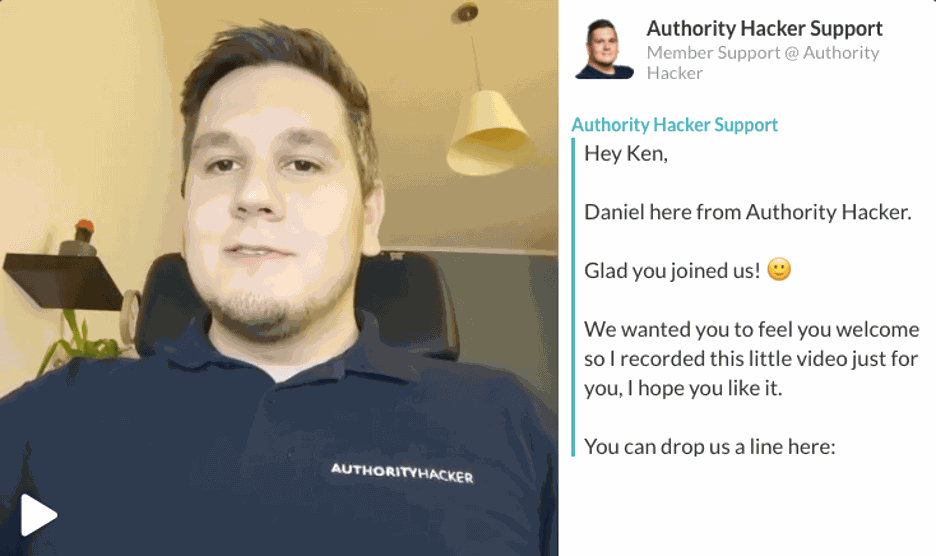
Stuff like this helps us overcome the lack of in-person contact between our support team and customers.
3. Build an Information Hub
On average, support agents spend more than one-quarter of their time searching for the right answer to customer queries. And 80% of the time, they can’t even find it.
Even veterans of your customer support team will occasionally come across questions they’ve never answered before that require a bit of research.
Of course, if they’re remote, they can’t simply walk over to their manager to ask for help. They might even be based in radically different time zones, and likely can’t afford to wait several hours for a response.
That’s a big problem in a world where about one in three consumers expects a response within one hour.
That’s why it’s so important to have a central knowledge hub where support agents can access key information about systems, processes and policies.
Our internal database includes a bunch of templated responses to frequently asked questions that can be easily personalized to fit the exact requirements of the customer query.
4. Assign Clear Tasks & Deadlines
When your whole team works in one office, it’s easy to get complacent about workflow.
Someone might walk up to your desk and ask you to do a “quick task”, without a proper brief, that ends up taking half a day to complete.
Clearly, that’s not an efficient way to work. And it definitely doesn’t translate for remote teams; they need something a lot more robust.
We use project management software – Asana is our preferred option, but there are a ton of alternatives – to define tasks clearly, set transparent deadlines, and keep everyone accountable.
When unexpected tasks arise, which they inevitably will in a customer support setting, we still take the time to break them down and assign due dates so everyone’s clear on exactly what needs to be done (and who’s responsible for doing it).
Delivering five-star support is about more than just getting the basics right. It requires a little “X-factor” from time to time.
That’s why we give each of our team members a $50 monthly “wow!” budget that they’re basically free to spend in any way they see fit.
The only rule we put in place is that it has to provide some sort of benefit to our customers. That could be anything from a birthday card to a gift voucher to some fancy stationery. Recently, we sent one of our super helpful community members a pair of customized drumsticks to say “thanks” for all his efforts in our Facebook Group:
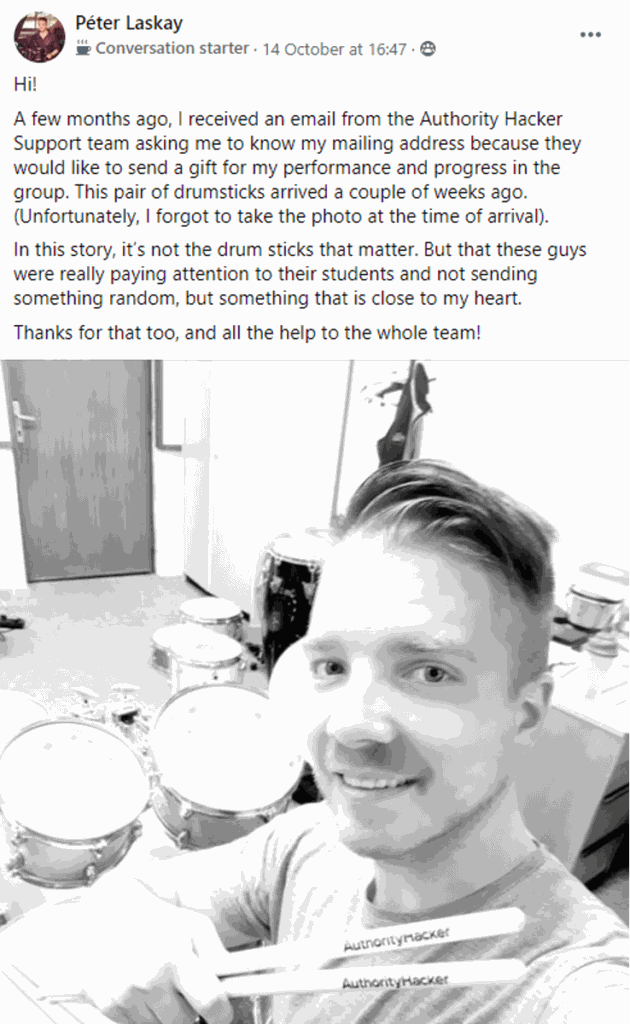
Surprise gifts aren’t a shortcut to superb customer support.
If you don’t respond promptly to queries, give clear answers, and generally make it as simple as possible for customers to get maximum value from your product, it won’t make any difference if you send them a box of chocolates in the mail.
But if you’re already nailing the basics, a single “wow!” moment can turn a loyal customer into a real advocate for your brand.
In Summary
The primary goal of Ruby’s support chat is to help your business preserve trust and increase accessibility by being there for customers and provide excellent service.
But there are additional benefits. When you get it right, customer support can also be an extremely valuable online marketing tool for your business.
There’s no reason why that should change if your support function is going remote – it just means getting your processes, policies and tech stack in place. In fact, here at Authority Hacker, we genuinely believe our customer support has improved massively since we ditched our last office.

Gael Breton is the co-founder of Authority Hacker, an industry leading online marketing education company